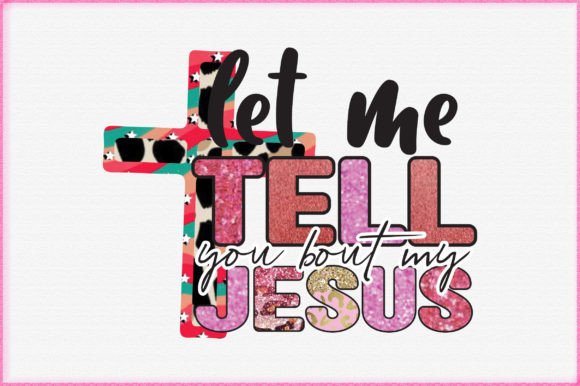
Let Me Tell You Bout My Jesus: Graphics for Faith Crafts
Evaluating Visual Warmth for a Boutique Faith Collection
When sourcing assets for a client’s seasonal faith-based product line, my primary filter is always emotional resonance paired with technical reliability. As a professional designer managing branding and merchandise for small businesses, I cannot rely on assets that look polished in a thumbnail but fail during production. My recent evaluation of Let Me Tell You Bout My Jesus was conducted specifically for a handmade business client launching a new collection of devotional accessories and apparel. The goal was to find a centerpiece graphic that felt personal, testimonial, and authentic rather than corporate or sterile.
My first impression of this graphic design asset was that it successfully captures a conversational tone. In the crowded creative marketplace, many religious designs lean heavily into ornate script or rigid iconography. This piece, however, feels more like a modern testimony. It bridges the gap between traditional reverence and contemporary expression, making it highly relevant for clients targeting a younger demographic or those seeking a softer, more approachable brand identity. For a designer, this mood is crucial; it dictates whether the asset will serve as a bold hero element or a subtle supporting texture. In this case, the visual weight suggests it is designed to be the focal point of any composition.
Performance Across Print-on-Demand and Digital Formats
For this specific client project, we needed versatility across both physical products and digital marketing visuals. The file specifications are a critical part of my review process. It includes 1 high-resolution 300 DPI PNG, file with transparent backgrounds. These are perfect on t-shirts, mugs, signs, cards, and much more. Size 12×12 in. Note this download does not include SVG or vector formats, which immediately informs my workflow strategy.
The absence of an SVG design means this asset is raster-based. For sublimation design and direct-to-garment printing, the 300 DPI resolution at 12x12 inches is excellent. I tested the file on a dark cotton t-shirt mockup, and the edges remained crisp without pixelation. The transparency was clean, requiring no additional masking in Photoshop, which saves valuable billable hours. However, because it is not a vector, I would hesitate to use this for large-format signage exceeding its native dimensions or for intricate logo design where infinite scalability is required. It excels as a standalone illustration for merchandise but should not be treated as a scalable brand mark.
In the digital realm, this PNG design performs exceptionally well for social media graphics and Etsy product listings. When creating Canva templates for my client’s Instagram stories, the 12x12 square format fit perfectly within standard post dimensions without cropping essential details. The transparent background allowed me to layer it over textured paper backgrounds and solid brand colors seamlessly, maintaining visual hierarchy without fighting against a white box around the artwork.
Ideal Applications for Merchandise and Editorial Layouts
Understanding where a creative design asset shines is just as important as knowing its limitations. Based on my testing, Let Me Tell You Bout My Jesus is best utilized in applications where emotional connection drives conversion. For print-on-demand sellers, this is a prime candidate for tote bags, ceramic mugs, and greeting cards. The square aspect ratio aligns naturally with these substrates, reducing the need for awkward resizing that can distort proportions.
For editorial design and printable wall art, this graphic serves as a powerful anchor. I envision it centered on a journal cover or as the main visual for a church event flyer. Its strength lies in its ability to carry a layout independently. Unlike clipart that requires clustering to create impact, this illustration has enough internal detail and narrative weight to stand alone. For content creators and bloggers, it provides an immediate visual hook for articles discussing personal faith journeys, testimonials, or seasonal reflections. The style supports a narrative-driven approach to marketing visuals, helping small business branding feel less transactional and more relational.
Navigating Technical Constraints and Hierarchy Challenges
Professional judgment requires acknowledging where an asset might struggle. While Let Me Tell You Bout My Jesus is robust for crafts and apparel, designers must exercise caution in specific contexts. Because this is a raster file, it is not suitable for projects requiring color separation for screen printing unless you are comfortable with halftone conversion or DTG methods. If your client requires spot-color vinyl cuts for a Cricut project, the lack of an SVG file means you would need to trace the image manually, which can result in loss of detail and jagged edges.
Visual hierarchy is another consideration. This graphic has a distinct personality and significant visual density. Placing it in a crowded layout with multiple competing elements will result in a chaotic design. It demands negative space. I advise against using it as a small watermark or a secondary badge; the intricate details will be lost at reduced sizes, and the message will become illegible. Furthermore, for minimalist branding or high-end luxury packaging, the stylistic choice here may feel too informal. It is perfect for a boutique or handmade aesthetic but may clash with strict corporate identity guidelines that require cleaner, geometric precision.
Essential Pre-Production Checks for Commercial Use
Before integrating any digital product into a paid client deliverable, I run through a rigorous quality assurance checklist. For this asset, start by testing contrast. Place the PNG on both pure white and deep black backgrounds. Ensure the edges blend smoothly and that no residual artifacts from the removal process are visible. Since this is intended for commercial design, verify the licensing terms explicitly. Confirm that the license covers the specific end-use, whether that is selling physical goods, offering digital downloads, or using it in marketing materials for a third-party organization.
Typography pairing is equally vital. Test the graphic alongside various typefaces to establish the right tone. A bold sans serif font creates a modern, declarative statement suitable for t-shirt design. Conversely, a delicate serif or handwritten font enhances the intimate, storytelling vibe for stationery or invitations. Always preview the combination at actual print size. What looks balanced on a 27-inch monitor may appear disjointed on a 4-inch coaster.
Finally, validate the resolution for your specific output. While 300 DPI at 12x12 inches is industry standard for most crafts, calculate the effective PPI if you plan to scale it. If you stretch this file to 18 inches for a pillow cover, the resolution drops to 200 DPI, which may appear soft in print. For web design and social media, downsample the file to 72 DPI to ensure fast loading times without sacrificing screen clarity. By treating Let Me Tell You Bout My Jesus with professional scrutiny rather than assuming plug-and-play usability, designers can leverage its strengths while mitigating technical risks, ensuring the final deliverable meets both aesthetic goals and production standards.
Final Verdict for Creative Professionals
Ultimately, Let Me Tell You Bout My Jesus is a specialized tool in a designer's arsenal. It is not a universal solution for every faith-based project, nor is it a replacement for custom lettering or vector logos. However, for the specific niche of handmade goods, boutique apparel, and personal storytelling within the crafts category, it offers significant value. The high-resolution PNG format respects the needs of printers and sublimation artists, while the transparent background facilitates efficient compositing for digital creators.
For brand owners and marketers, this asset represents an opportunity to add warmth and authenticity to a product line without the expense of custom illustration. For designers, it serves as a reliable foundation for building cohesive collections that resonate emotionally with audiences. As long as one respects the raster limitations and applies thoughtful typographic and layout strategies, this graphic can elevate a project from generic to genuinely moving. In the world of commercial design and creative entrepreneurship, finding assets that balance technical specs with genuine soul is rare, making this a noteworthy addition to a curated resource library.