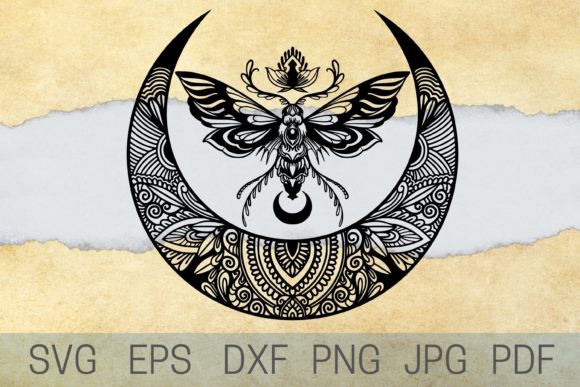
Moth Moon: A Designer’s Review for Embroidery
When evaluating a new graphic for potential embroidery projects, I look beyond the initial aesthetic appeal and focus on how the artwork will translate into thread. As a designer who regularly reviews assets for both personal crafting and commercial production, my assessment of Moth Moon is rooted in practical application rather than just visual admiration. This design carries a distinct celestial and botanical mood that immediately suggests specific use cases, but its success as a machine embroidery design depends entirely on how we adapt these vector lines into stitch data.
Celestial Aesthetics Meets Stitch Reality
My first impression of Moth Moon is that it possesses a balanced composition ideal for center-chest placement or back-of-garment statements. The interplay between the organic curves of the moth wings and the geometric precision of the moon phase creates a focal point that feels intentional rather than cluttered. For an Etsy seller or boutique owner, this visual personality signals "handmade quality" even before a single needle penetrates fabric. However, as a graphics file intended for multiple platforms, including SVG for Silhouette and Cricut, EPS, and DXF formats, we must remember that vectors are merely roadmaps for embroidery. They do not contain stitch density or pull compensation data.
The mood of this piece leans heavily into cottagecore, witchy aesthetics, and nature-inspired themes. It naturally belongs on unbleached canvas, dark denim, or sage green linen. When I visualize this as a finished product, I see it working exceptionally well as a tote bag design or on the back of a heavyweight sweatshirt. The symmetry allows for easy hooping, which is a massive time-saver during bulk production for a craft business. Unlike asymmetrical illustrations that require constant re-hooping adjustments, Moth Moon respects the grid, making it a reliable candidate for consistent merchandise.
Real-World Application: The Custom Sweatshirt Test
To truly judge this asset, I mentally walked through a recent client request for a custom embroidered sweatshirt intended as a personalized gift. The client wanted something mystical but wearable. Moth Moon fits this brief perfectly, but the execution requires strategy. If I were digitizing this today for that sweatshirt, I would avoid converting the entire graphic into dense fill stitch. On fleece or French terry, heavy coverage can create a bulletproof patch effect that distorts the garment's drape.
Instead, I would utilize the vector lines to create a hybrid approach. The outer wings could be rendered with a textured fill stitch to mimic natural patterns without excessive density, while the moon outline would benefit from a clean satin stitch or a triple running stitch for definition. This reduction in stitch count maintains the soft hand-feel necessary for comfortable apparel. For a small shop product, this consideration directly impacts customer satisfaction; buyers want art they can wear, not armor. Furthermore, because this design arrives as a digital embroidery file precursor (vector), you have the freedom to resize elements before digitizing, ensuring the moon doesn't overwhelm the moth on smaller sizes.
Navigating Fabric Limitations and Hoop Constraints
While Moth Moon is versatile, it demands respect for material limitations. I would exercise extreme caution when applying this to stretchy ribbed knits or lightweight performance fabrics. The intricate details inherent in moth wing patterns can get lost if the fabric shifts during stitching. If you plan to use this for baby embroidery or lightweight summer tees, you must pair it with appropriate stabilizer. A cut-away mesh is non-negotiable here to prevent the design from puckering or distorting the delicate wing tips.
Small hoop sizes present another challenge. If you are working with a 4x4 hoop, you may need to simplify the design or remove peripheral decorative elements to maintain clarity. Tiny lettering or minute dots within the moon phases often turn into thread nests at reduced scales. Always check your minimum text height and detail tolerance before committing to a run. Additionally, curved surfaces like caps are generally ill-advised for this specific layout unless you are using a specialized cap frame and have simplified the vertical axis of the design. The horizontal spread of moth wings fights against the curvature of a hat brim, leading to registration errors.
Commercial Viability and Brand Consistency
For creative entrepreneurs selling digital products or physical goods, consistency builds trust. Moth Moon offers excellent brand alignment for shops focused on alternative fashion, nursery decor, or eco-friendly goods. When creating printable mockups for your listings, ensure you test the design in both black-and-white and full-color variations. Some customers struggle to visualize how a monochrome line art version translates from a colorful vector preview. Providing accurate representations reduces returns and increases buyer engagement.
If you are producing patches, this design is a strong contender. The defined edges allow for a clean merrowed border, and the internal contrast reads well from a distance. However, verify your licensing terms before selling finished items. While you receive the source vectors, the right to sell commercial embroidery derived from them varies by creator. Protecting your business means confirming these rights upfront. For holiday embroidery or seasonal collections, consider how Moth Moon pairs with other assets in your library. Does it share a similar line weight? Consistent styling across a collection elevates perceived value and encourages multi-item purchases.
Essential Pre-Stitch Checklist for Makers
Before loading Moth Moon into your machine for a final project, run through this practical evaluation list to ensure professional results:
- Test on Scrap Fabric: Never stitch directly on a sellable item first. Use a scrap of the exact same fabric and stabilizer combination to check for registration issues.
- Verify Thread Contrast: View your digitized file in grayscale. If the moth and moon blend together without color differentiation, adjust the stitch angles or add texture to create separation.
- Check Stabilizer Weight: Match your backing to the fabric texture and stitch density. Heavier designs on light fabrics require more support, not less.
- Inspect Small Details: Zoom in to 100% in your software. Ensure no individual stitch points are shorter than your machine’s minimum jump threshold.
- Confirm Hoop Size Compatibility: Measure the actual stitch field, not just the bounding box. Leave adequate margin for hoop clearance and fabric tension.
- Review Licensing: Double-check whether the included SVG, EPS, and DXF files permit commercial end-product sales or if they are for personal use only.
- Mockup Accuracy: Create realistic previews that show the design on the actual product type you intend to sell, avoiding flat digital overlays that misrepresent texture.
Ultimately, Moth Moon is a promising asset for the thoughtful maker. Its strength lies in its adaptability, provided you treat the vector files as a starting point rather than a finish line. By respecting the physics of thread and fabric, you can transform these digital graphics into tangible, high-quality handmade products that resonate with customers and stand up to real-world wear. Whether you are crafting a unique personalized gift or building a scalable commercial embroidery line, success comes from marrying artistic vision with technical discipline.